
Impressions of an un - curated rural life
I grew up in the north western plains of India, where my roots lie. A rural society that lived with earth and water entwined with every little daily activity.
I saw a lot of green fields, supple rivers and ponds and a lot of mismatched, patched up, mended, sewn up daily life . (use objects.) Nothing was perfect. Picture perfect I mean, in the way I would see things on my IG feed today.
Nothing was curated.
The agrarian aesthetic
In the village I grew up in, there was a chaos of houses almost stumbling upon each other and yet always so approachable. The narrow streets laid with burnt red clay bricks were always dusty, always winding like a desert snake but gently and ultimately giving way to the vast green fields all the way to the horizon.
It is here that I met contrast of color and the texture of khadi first.
And I can feel the echoes of this earthy and connected rural life in my work today at Fayakun.
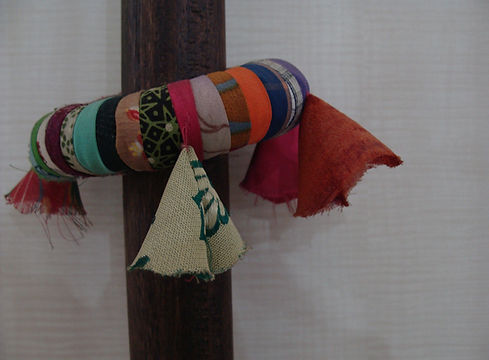
Women carried colorful ‘indhis’ made of bright color fabric scraps to use as a base for earthen pots full of water they carried on their heads.
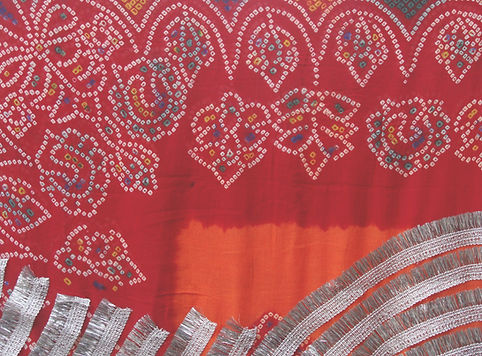
I always wondered how these women managed to walk with these mud pots with their faces covered up. They used their odhnis to cover their faces….and these odhnis were of such soft translucent cotton. Voile they used to call them, these soft ones with floral chintz or tie die patterns scattered on them.
The water pot in summers was always wrapped in layers of wet khaddar to keep the water cool.
And the old dukaniyas (embroidered khaddar shawls) of which the color had aged with such humility, were spread out on the charpois on winter evenings.
I wasn't allowed to walk alone to the fields, but whenever I found a chance, I did.
And while on the dusty sepia street, I will see an old curtain with a crimson hand sewn patch to one side, a turquoise one on the other. The hookas around which old men sat and played cards had faded, aged khaddar rags wrapped around the mouth of the pipe for comfort.
By the time I would reach the threshold of a vast horizon, I would have absorbed a myriad colors and textures set against warm sepia light, seemingly put together without any scheme or thought for aesthetic. But when looked deeper, they were all a testament to a culture of quality, of preservation, of creation over consumption, of valuing each scrap of cloth and article you brought into your life till the moment you really could.
A culture of creation over consumption
It also reflected the resourcefulness of a so called basic, poor farmer’s life and the emotional connection these afternoons witnessed as women sat together to create beautiful objects of utility. Singing, laughing, catching their breath for a moment in a hard life of daily physical labor.
There was an entire culture around fabric and objects made out of cloth. This culture can be found in almost all regions of India with different names, levels of intricacy and complexity.
Here, there were bijnas or hand fans, hand embroidered shawls and gorgeous phulkaris, upcycled gudris or baby blankets, wallets, pom poms for bicycles, even bandages used for healing wounds and cloth napkins to wrap rotis in that would be carried to the farms at noon for lunch.
And all this was khadi. Woven since the blooming of early Indus River Valley Civilization where today lies Pakistan and north western India. The hand spun hand cotton woven on hand looms from flower of the indigenous cotton seed Gossypium Arboreum.
Me and Fayakun
I am inspired by these echoes of memory, of a simpler way of life.
While Fayakun embodies my connection to the resilience and rawness of being human through fabric and color.
It lets me perhaps, to bring fragments of my early memory into my future.
- aastha



Why Handwoven Cotton ?
_edited.jpg)